4th Grade Frenzy: Instructional Strategies
Facebook Email Me Bloglovin TPT Shop Pinterest Image Map
Home About Me Shop Freebies
Showing posts with label Instructional Strategies. Show all posts

February 3, 2021

Improving Student Writing

Using task analysis may help students improve their writing. Task analysis involves breaking a process up into smaller learning components. If writing is broken down into manageable parts, students may progress to a finished product with greater confidence and success. 

improving-student-writing


It may be helpful to model steps 1 - 5 with a class writing sample before students try the process on their own.

1. Brainstorming

Once students are given a topic or writing task, allow them to brainstorm what they know about a topic. This can be done on a brainstorming worksheet or even a sticky note. 

2. The Best Ideas

Have students circle the ideas they think are the best.

3. Graphic Organizer

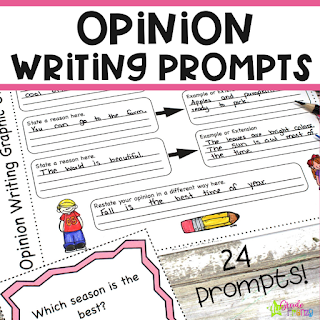
Provide a graphic organizer that has boxes to place each sentence. The sentences will not be in paragraph form yet. If just starting out, have students work on just one paragraph. 

4. Rough Copy aka Sloppy Copy

Students write a paragraph in proper form using their graphic organizer as a guide.  Allow students to read their paragraph first to themselves and then out loud to a partner. Students can find and correct errors when they read out loud. Make a quick check of the sloppy copy before students write a final copy.

5. Final Copy

Students write their paragraph(s) out neatly on colored paper, fun writing paper, or type and print.

6. Craft

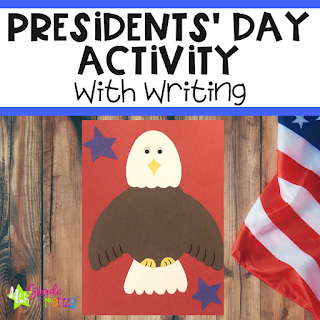
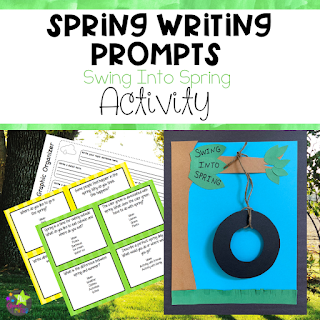
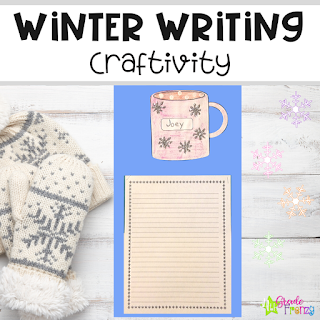
Select some writing assignments for display. Have students create a craft after the writing is complete because a hallway or bulletin board is a great place the display the work of these young authors! 


Here are a few writing resources that include graphic organizers to help students build confidence:
improving-student-writing

improving-student-writing

improving-student-writing

improving-student-writing

improving-student-writing

improving-student-writing


A few years back, I asked students to begin writing, and the class looked at me with that collective blank expression. One student asked, "But where's our organizer?" That was all the proof I needed that this tool was helping students become successful writers! 

Are you a subscriber yet?

FREE Activity for new subscribers:  Sign up for the Fourth Grade Frenzy newsletter!

Click the star to follow my TpT store! 


October 11, 2020

4 Effective Instructional Strategies That You Can Use This Week

Effective instructional strategies withstand the test of time, and even some learned in my college years remain useful. While I can be sure that Dr. Green never imagined how far technology would advance or that students would need to continue learning during a pandemic, her course introduced me to how students experience the world and learn. The best of these strategies involve giving students time to manipulate and process new information.

instructional-strategies

1. Graphic Organizers 

Graphic organizers range from Venn diagrams to timelines and can help students make connections and remember information. I once asked my class to complete a rather simple writing assignment. A student asked, "But where is our organizer?" Even though I didn't provide a writing organizer for this lesson, the students knew that this tool helped them do their best work.


2. Movement

Research shows that kinesthetic activities have many benefits to learning. When it comes to movement activities, we often think about preschool and early elementary-age students. However, movement activities continue to benefit learners at any level. One way to add movement to a lesson is to incorporate an educational brain break during a lesson. For example, in the middle of a geometry lesson, you could play Simon Says Geometry. Students use their hands and arms to show right angles, acute angles, obtuse angles, parallel lines, intersecting lines, points, lines, line segments, and rays. If you try this game with your kiddos, throw in some sillies and enjoy the laughter! 


3. The Anticipatory Set 

An anticipatory set is a set of prompts that get students ready to learn. The goal is to activate prior knowledge, build background, or make connections. An anticipatory set can be set up as a gallery walk, mystery bags, or simply a series of questions. Considered to be time-consuming, their importance is sometimes overlooked. Adding an anticipatory set to one lesson per day or a couple per week to build your library of this effective strategy would prevent overwhelm. 


4. Sorting Activities 


Young children sort physical objects by color, shape, size, etc. School-age students can sort pictures, words, phrases, and sentences into appropriate categories as they process information and build upon prior knowledge.  Sorting activities can be used for individual assignments, partner work, small group activities, or assessments. 


The art of teaching includes the selection of instructional strategies to use in each lesson. Have you incorporated any of these strategies into your lessons recently? 

Are you a subscriber yet?

FREE Activity for new subscribers:  Sign up for the Fourth Grade Frenzy newsletter!

Click the star to follow my TpT store!