4th Grade Frenzy: Reading
Facebook Email Me Bloglovin TPT Shop Pinterest Image Map
Home About Me Shop Freebies
Showing posts with label Reading. Show all posts

July 7, 2026

20 Read-Aloud Chapter Books Your 4th Graders Will Love

There's something magical about reading aloud to your class. Even as students become stronger independent readers, they still love gathering together to hear a great story. A memorable read-aloud can spark meaningful discussions, build classroom community, introduce new vocabulary, and inspire a lifelong love of reading.


Whether you're looking for a laugh-out-loud favorite, a touching classic, or an adventure that keeps students begging for "just one more chapter," these books are classroom favorites that fourth graders continue to enjoy year after year.

1. The Best School Year Ever by Barbara Robinson

The hilarious Herdman family is back! Students love the unexpected adventures, humor, and memorable characters. It's a fun choice for building classroom community.

2. The Best Christmas Pageant Ever by Barbara Robinson

Although perfect during the holiday season, this classic is filled with humor, heart, and important lessons about kindness and second chances.

3. Charlotte's Web by E. B. White

A timeless classic about friendship, loyalty, and love. Don't be surprised if a few tissues are needed by the final chapters!

4. Stone Fox by John Reynolds Gardiner

This short novel packs an emotional punch. The exciting sled race keeps students on the edge of their seats from beginning to end.

5. Because of Winn-Dixie by Kate DiCamillo

A touching story about friendship, family, and finding your place. Students quickly fall in love with Winn-Dixie and the unforgettable characters in Naomi, Florida.

6. Charlie and the Chocolate Factory by Roald Dahl

Filled with imagination, humor, and larger-than-life characters, this classic never fails to capture students' attention.

7. James and the Giant Peach by Roald Dahl

Adventure, fantasy, and quirky characters make this one of Roald Dahl's most beloved stories for elementary students.

8. How to Eat Fried Worms by Thomas Rockwell

Expect lots of laughter! This humorous classic is always a hit, especially with reluctant readers.

9. Holes by Louis Sachar

Mystery, adventure, humor, and unforgettable plot twists make this one of the best upper elementary read-alouds.

10. Tales of a Fourth Grade Nothing by Judy Blume

Students enjoy Peter's frustrations with his mischievous little brother, Fudge. The humor feels just as fresh today.

11. Frindle by Andrew Clements

Can one student really invent a new word? This clever story encourages creativity while exploring the power of language.

12. The Lemonade War by Jacqueline Davies

A realistic story about siblings, friendship, money, and misunderstandings that often leads to great classroom discussions.

13. The One and Only Ivan by Katherine Applegate

Based on a true story, this moving novel encourages empathy while introducing unforgettable animal characters.

4. Wonder by R. J. Palacio

A beautiful story about kindness, acceptance, and choosing compassion. It creates meaningful conversations throughout the school year.

15. The Mouse and the Motorcycle by Beverly Cleary

Adventure, humor, and an adventurous mouse named Ralph make this a fun read for elementary students.

16. Hatchet by Gary Paulsen

Brian's survival story keeps students engaged while encouraging perseverance and problem-solving.

17. Shiloh by Phyllis Reynolds Naylor

A thoughtful story about honesty, responsibility, and doing what's right, even when it's difficult.

18. The Miraculous Journey of Edward Tulane by Kate DiCamillo

This beautifully written story follows a china rabbit whose journey teaches powerful lessons about love and compassion.

19. The BFG by Roald Dahl

Filled with imagination, humor, and whimsical language, this fantasy favorite introduces students to the unforgettable Big Friendly Giant.

20. A Boy Called Bat by Elana K. Arnold

Bat's unique perspective and his determination to care for a baby skunk make this a heartwarming and engaging modern read-aloud.

Why Read-Alouds Still Matter in Fourth Grade

Reading aloud isn't just for younger students. Fourth graders benefit from hearing fluent reading, discussing rich vocabulary, making predictions, and connecting with characters in ways that independent reading doesn't always allow. Read-aloud time also creates shared experiences that help build a positive classroom community.

Whether you read one chapter each afternoon or save read-alouds as a special Friday treat, these books have the power to create lasting memories for your students!

With faith and friendship,

September 25, 2025

11 Fun Ways to Help Students Track Print While Reading

Tracking print is an essential early literacy skill that helps students connect spoken words to written words. When students learn to track text from left to right and match one spoken word to one written word, they build the foundation for fluent reading.


Here are 11 fresh and fun ways to practice tracking print in your classroom:

1. Finger Tracking

The simplest method—students use their own finger to follow along under each word as they read. 

2. Use a Reading Pointer

Craft sticks, straws, or coffee stirrers can double as reading wands. Switching up the tool keeps students engaged.

3. Point with Seasonal or Fun Items

Take tracking up a notch with playful, themed items! Think Halloween monster (or witch) fingers, Christmas candy canes, Valentine’s Day pencils, or even lemonade stirrers in the spring. Kids will look forward to using them!

4. Highlight Strips or Rulers

Transparent strips or rulers placed under the text help students keep their place and focus on one line at a time.

5. Echo Reading

Model good print tracking by reading a line while pointing to each word. Students then echo it back, following along with their own finger or pointer.

6. Choral Reading

Read aloud together as a group while tracking with fingers. This helps reinforce rhythm, pacing, and directionality.

7. Word Windows

Create a card with a cut-out “window” so only one word shows at a time. This is a great tool for emerging readers who need extra focus.

8. Bookmarks

Students use bookmarks to keep their place. Students can use the corner or place the ruler under the line of text. They may enjoy decorating their bookmark!

9. Tracking with Technology

Many e-books highlight words as they are read aloud. These digital supports can be excellent for visual reinforcement.

10. Partner Reading

Pair students up! One student tracks the words while the other reads aloud. Then they switch roles.

11. Whisper Reading

Students point and read in a whisper voice (or squeaky voice or whatever voice you can tolerate!)


Consider using these ideas with shorter passages. Rotate tools and ideas to keep your students engaged. 

With faith and friendship,

August 20, 2025

7 Creative Ways to Motivate Middle Grade Readers


Motivating middle grade students to read can sometimes feel like a challenge. With so many distractions competing for their attention, books don’t always make the top of their list. But with the right strategies, you can help students rediscover the joy of reading. Here are 7 engaging ways to motivate your middle grade readers!


1. Reading Buddies

Pair up students so they can share stories together. Buddies can take turns reading aloud, summarize chapters for each other, or even quiz one another on details. The social aspect makes reading feel more like a shared adventure.

2. Guest Readers

Invite parents, other teachers, or even community members to come in and read a favorite book or short story. Middle graders love seeing familiar adults in a new light—and it’s always fun when the principal shows up with a silly picture book!

3. Author Visits

Nothing excites young readers more than meeting the creator behind their favorite stories. Whether in person or virtual, author visits give students the chance to ask questions, learn about the writing process, and see that authors are real people just like them.

4. Book Clubs

Give students a voice in choosing books for small reading groups. Book clubs create accountability, encourage discussion, and help students discover new genres. You can make it extra fun by providing snacks, cozy seating, or themed activities related to the book.

5. Reading Challenges

Turn reading into a game! Create punch card bookmarks, track books in a class jar, or set up milestone prizes for completed books. A little gamification can go a long way with middle graders.

6. Choice & Ownership

Let students pick their own books whenever possible. Graphic novels, biographies, magazines, and audiobooks all count as reading. When students feel ownership over what they’re reading, their motivation naturally increases.

7. Special Reading Events

Host a Flashlight Friday, a classroom reading picnic, or even build a cardboard “reading clubhouse” where students can read inside for a few minutes at a time. Simple changes in the routine make reading feel exciting again.

Teacher Corner: Start a Teacher Book Club 📖

If we want our students to be lifelong readers, it helps for them to see us modeling a love of books. One fun way to do this is to start a teacher book club at your school! Not only will you stay motivated as a reader yourself, but you’ll also build community with your colleagues.

Here are 3 ideas to get your teacher book club started:

Genre Rotation – Rotate genres each month (mystery, historical fiction, memoir, etc.) so everyone gets a chance to explore something new.

Snack & Story Night – Combine your meeting with a potluck snack night for a cozy, bookish get-together.

Lunch or Winery Meetings – Host your book club at a favorite lunch spot (inservice days may work well), or plan an evening gathering at a local winery for a relaxing, grown-up twist.

How I Afford My Teacher Book Club Books 💡

I use the Ibotta app to earn cash back on my everyday grocery shopping, and then I use that money to purchase my teacher book club books with Amazon gift cards. It’s a fun way to treat myself guilt-free!

👉 Check out Ibotta here – my affiliate link

After I finish the books, I sell them through Sell Your Books, which gives me a little extra money to put toward the book club meeting. 🍷😋

👉 Check out Sell Your Books here – Not an affiliate link


With the right mix of creativity, social connection, and ownership, middle grade readers can develop a lifelong love of books—and you might find yourself more inspired to read right alongside them!

September 12, 2024

Robot Activities for Elementary Students

As teachers, we are always looking for ways to bring stories to life and engage our students in creative, hands-on learning. The Wild Robot by Peter Brown is a beloved novel that blends themes of nature, survival, and technology through the journey of Roz, a robot stranded in the wild. With the release of The Wild Robot movie, now is the perfect time to incorporate robot-themed activities that deepen students' understanding and enhance their connection to the story.

Here are four robot-themed activities designed to complement the book and/or movie and spark your students' imaginations.

1. Build a Survival Robot

In The Wild Robot, Roz must learn how to survive in the wilderness. Challenge your students to design and build their own "survival robot" using recycled materials like cardboard, foil, and plastic containers. Have students think about the types of features their robot would need to survive in different environments, such as a forest, desert, or ocean.

2. Create a Nature Journal

In The Wild Robot, Roz learns from the animals and the environment around her. To reflect this, students can create their own nature journals as if they were robots like Roz. Take students outside to observe their surroundings, and have them document their observations in a journal using descriptive language and sketches.

3. Robot Emotions Writing Task

One of the key themes of The Wild Robot is Roz learning about emotions and forming relationships with the animals. In this writing activity, ask students to imagine how a robot might express or understand emotions like fear, happiness, or sadness.

Have students write a short story or diary entry from the perspective of a robot who is experiencing emotions for the first time. Encourage them to be creative, thinking about how a robot might explain feelings in logical or mechanical terms.

4. Robot Themed Lessons

Have students build this robot to learn about math functions. What a fun way to practice math!

Math Functions Robot Activity


By incorporating these robot-themed activities into your lessons, you can spark your students' creativity and critical thinking. These activities not only complement the movie’s themes of nature and technology but also allow your students to immerse themselves in hands-on projects that connect literature with real-world learning.

Have fun bringing Roz’s world to life in your classroom—and watch your students’ imaginations take flight!

Are you a subscriber yet?

FREE Activity for new subscribers:  Sign up for the Fourth Grade Frenzy newsletter!

Click the star to follow my TpT store! 


With faith and friendship,
May 27, 2024

Summer Reading (not a challenge)

One of the best ways to prevent the summer slide is to keep kids reading over the summer. Help the grown-ups by suggesting ways to make reading easy and fun. 

Some ideas include: 

1. Book Clubs

Students can form summer book clubs with their friends. They can plan regular meet-ups to share their thoughts about the books. Wouldn't it be fun to make a fort to have the meet-ups?!

2. Audio Books

Audiobooks are a way to change things up a bit. Some apps are even free from the library.

3. Local Library

Make regular trips to the library. Children can choose books that interest them. Many libraries offer programs and events along with a summer reading program.

4. Book-Themed Movie Nights

Read a book together and then watch the movie. You could even serve snacks that relate to the story.

5. Family Reading Nights

Designate one night a week to gather and read. 

6. Storytelling

Create stories together as a family. Each family member can take turns adding to the story. Be sure to write it down!

7. Book Swap

Organize a book swap with other families. Each child can bring books they've read and exchange them for new ones. The adults can participate as well.

8. Reading Picnic

Pack some books and a picnic lunch. Head to the park or beach.

9. Bookstore

Visit a local bookstore to browse. Set a budget and let each child choose a book to buy.

10. Reading Nook

Create cozy reading nooks with pillows and comfy chairs. Try a tent or fort for added fun!


Engaging students in summer reading with their families can create memories and strengthen reading habits.

More about Reading:

10 Ways to Promote Reading at Home

5 Ways to Teach Reading Comprehension

Benefits of Read Alouds in the Classroom


Are you a subscriber yet?

FREE Activity for new subscribers:  Sign up for the Fourth Grade Frenzy newsletter!

Click the star to follow my TpT store! 


With faith and friendship,


February 27, 2023

Read Across America Day Ideas For Big Kids

4th Graders may be big kids, but most still like to be part of the Read Across America Day celebration.


Here are a few ideas that are fairly easy to implement:

1. Pair up with a buddy class for story time. 📘

If you are in a school with younger grades, try pairing up with Kindergarten or First Grade. The fourth graders can bring in picture books they liked when they were little to read to a younger buddy. Alternatively, the school librarian could help with book selection. Students can finish up with a snack and juice or even make it a reading picnic!

2. Play a Dr. Seuss book trivia game. 🤔

Create a trivia game using sentences from Dr. Seuss's books. Read each sentence and have students guess which Dr. Seuss book the sentence came from.

3. Schedule D.E.A.R. time. 📖

Drop Everything And Read! Do this with your class or get the whole school involved. Decide on a time and for 15 minutes everyone in the school drops everything and reads. 

4. Organize a book collection. 📚

Ask students to gather up books they have outgrown and donate them to an organization in need.

5. Start a book club. 📕

Students may want to be part of a small group reading the same book. Assist students in getting started by looking for multiple copies of the book. You can ask the librarian, check local thrift stores, or borrow from a colleague. 

Even big kids can enjoy Read Across America Day!☆

Additional posts about READING:

5 Ways to Teach Reading Comprehension

Benefits of Read Alouds in the Classroom

10 Ways to Promote Reading at Home

Are you a subscriber yet?

FREE Activity for new subscribers:  Sign up for the Fourth Grade Frenzy newsletter!

Click the star to follow my TpT store! 


December 1, 2022

5 Ways To Teach Reading Comprehension

Reading comprehension is a major goal of reading instruction. Reading comprehension skills include visualization, making connections, character analysis, sequencing, discovering a theme, finding the main idea and details, drawing conclusions, comparing and contrasting, and more. Teaching reading comprehension can be fun!


Here are a few reading comprehension activities and strategies for your consideration:


1. Draw pictures during read-a-louds to help with visualizing.

Choose a passage or chapter from the book you are reading. Hand out a blank sheet of paper and tell students to draw what they picture in their minds during a read-a-loud. When you are finished reading, discuss the drawings or give students an opportunity to walk around and look at other classmates' drawings. Another option is to read a poem. Students love drawing pictures while they listen to Shel Silverstein's silly poems!

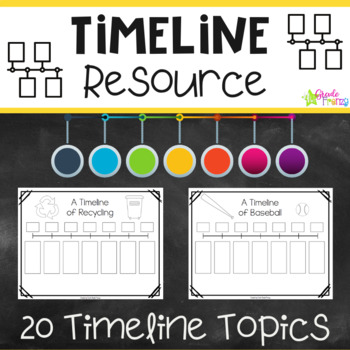
2. Create timelines to help with sequencing.

Give students a blank timeline and have them fill it in as they read. It may be beneficial to complete a timeline together first if students are not familiar with this tool.

This timeline resource contains a blank timeline along with other specific timelines:


3. Use Venn Diagrams to help with Compare and Contrast.

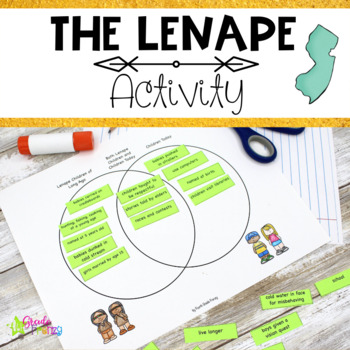
It may be fun to begin with overlapping hula hoops on the ground to sort information. Write the 2 ideas and specific information to be compared on index cards. Have students sort into the hula hoops. You could complete one together as a class and then break up into small groups to sort cards for other stories or texts.


This activity works well if you integrate social studies into your reading block. This Lenape resource is an example of how a social studies text could be used for a compare and contrast activity using a Venn Diagram. It is appropriate for the New Jersey curriculum but could work with any state in which the Lenape are studied.


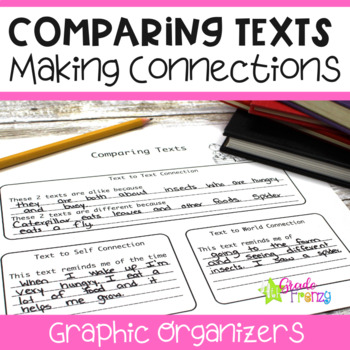
4. Give students time to make connections to self, world, and other stories.

After reading, have students finish this sentence: 

This story reminds me of...

Suggest that students think about how the story reminds them of something they experienced, something that happened in the real world, or another text. Have students respond on a sticky note and share responses.

These worksheets may help students organize their information: 


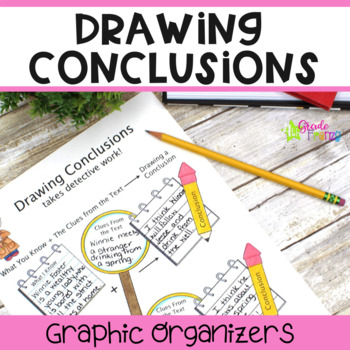
5. Have students use toy magnifying glasses to work on drawing conclusions.

Hand out inexpensive magnifying glasses and explain to students that they are gathering evidence in the story. Explain that drawing conclusions means using what you read and what you already know to form an idea or come up with an answer to a question. Use a notebook or this worksheet to help students draw conclusions: 


With activities that keep students engaged, comprehension is sure to improve!

Are you a subscriber yet?
FREE Activity for new subscribers:  Sign up for the Fourth Grade Frenzy newsletter!

Click the star to follow my TpT store! 


September 19, 2022

10 Ways to Promote Reading at Home

 Creating readers can be fun, and the process lends itself to parent-child bonding.

When parents or guardians ask how they can promote reading at home, here are some ideas you can suggest:

1. Visit the Local Library.

Can you remember the smell of your childhood library? The feeling of choosing those 3 books to take home? Today's libraries offer so much more than physical books. Children may enjoy an educational program at the library followed by choosing a few books to borrow. Some libraries even hold used book sales a few times a year. You just may find that perfect book for 50¢!

2. Let Them See You Read, Read, Read.


Children observe and learn from the adults around them. Take a physical book with you wherever a wait is involved...dental and doctor's appointments, motor vehicle, practices, etc. Let them see you reading at the park, the beach, and while relaxing at home.

3. Visit a Bookstore.

Plan an outing to a local bookstore. To keep expenses down, set a limit as to how much your child can spend.

4. Give Books as Gifts.

Books make great gifts and there are so many possibilities to match interests. Start a tradition of giving a book on a holiday that your family celebrates. Gift cards to a bookstore are another option.

5. Make a Reading Fort.

Make a fun fort out of blankets or sheets. Grab books, flashlights, and some snacks. Let the fun begin!

6. Read to the Kids.

Kids are never too old to hear a story, and a bedtime story is a nice relaxing way to end the day.

7. Listen to Audio Books.

Driving the kids to practice? Have that book downloaded and ready to go. 

8. Visit a Little Library.


If you pass one of those little libraries, leave a book and take a book. If you don't have a little library nearby, why not make one?

9. Have a Reading Picnic.


Pack a lunch, a blanket, and some books. Find some shade and enjoy your snacks and books!

10. Encourage Kids to Read to Younger Siblings or Even Pets!


Children can read picture books to younger siblings. If the books are below grade level, they can still help build fluency and confidence. Reading to pets could also be fun!

Parents and guardians, along with the children, are sure to benefit from some additional reading time at home!

Are you a subscriber yet?

FREE Activity for new subscribers:  Sign up for the Fourth Grade Frenzy newsletter!

Click the star to follow my TpT store! 


November 12, 2021

Teaching Drawing Conclusions

Students may benefit from a concrete to abstract approach when learning how to draw conclusions. 


You could start by playing a guessing game with real items.

Some ideas are:

  • Beach bag with towel and sunblock
  • Baseball or soccer bag with equipment 
  • Birthday present
  • Dog leash and tennis ball
  • Canvas and paints
  • Suitcase
  • Book and library card
  • Flashlight and sleeping bag

Display the items and have students guess where you are going.

Explain to the students that they used the items as clues + what they already knew to draw conclusions without you actually telling them where you were going.

Explain that when we read, we use clues in the story + what we already know to draw conclusions.

This drawing conclusions worksheet can be used with any text. It works well in guided reading groups to help students develop the skill.


You can reinforce the drawing conclusions skill with worksheets throughout the school year.

Are you a subscriber yet?

FREE Activity for new subscribers:  Sign up for the Fourth Grade Frenzy newsletter!

Click the star to follow my TpT store!